
5 Child Instrument Progression Stages for Young Beginners in 2026
Key Takeaways
- Matching instrument scale to child ergonomics prevents hand fatigue and boosts practice consistency by over 70%.
- Progressing from soprano ukulele to full-scale guitar spans five distinct developmental milestones between ages 4 and 14.
- A flexible diy wall mount guitar hanger system keeps fragile mini instruments and full-size instruments safely accessible off the floor.
- Modular steel rails with silicone-sleeved hooks protect sensitive finishes, including vintage nitrocellulose lacquer, across years of gear upgrades.
Table of Contents
- Understanding Child Instrument Progression in 2026
- Stage 1: The Soprano Ukulele for Early Motor Skills
- Stage 2: Graduating to the 1/2 Scale Classical Guitar
- Stage 3: The 3/4 Size Guitar for Building Finger Strength
- Stage 4: Electric Versatility and Scale Adaptability
- Stage 5: Full-Scale Performance and Professional Setup
- Building a Modular DIY Wall Mount Guitar Hanger System
- Top 5 Storage and Practice Problems GearHooks Solves
- Frequently Asked Questions
Starting a musical journey at a young age builds cognitive pathways, motor coordination, and self-confidence. However, when parents set up practice spaces, managing a growing fleet of odd-sized instruments often becomes an unexpected hurdle. Planning an adaptable diy wall mount guitar hanger setup allows you to keep instruments ready to play while protecting fragile necks from crowded bedroom floor clutter. According to child development insights from PBS, visual accessibility directly reinforces daily practice habits in younger students.
As young players graduate from starter ukuleles to half-size acoustics and eventually full-scale electrics, physical hand size and reach determine their comfort. Setting up an organized home music space with an adjustable diy wall mount guitar hanger ensures your child's instruments are displayed safely at their eye level. Research curated by National Geographic reveals that early artistic engagement stimulates deep neural elasticity when children practice without physical friction.

In this comprehensive 2026 guide, we outline the five essential stages of child instrument growth. You will discover practical metrics for tracking practice milestones and learn how modular wall storage seamlessly adjusts as your young musician develops.
Understanding Child Instrument Progression in 2026
Children do not grow in linear bursts, and their instrument requirements change just as dynamically. Forcing a seven-year-old onto a dreadnought guitar creates poor ergonomic habits that lead to forearm fatigue, finger numbness, and early burnout.
Physical Metrics Over Calendar Age
Parents often base instrument purchases solely on age brackets printed on retail boxes. Instead, evaluate fingertip span, shoulder height when seated, and wrist pronation. Ergonomic data documented by Johns Hopkins Medicine emphasizes that maintaining neutral wrist angles in developing joints prevents repetitive strain during instrument practice.
Tracking Milestones with Practice Journals
A systematic practice log tracks chord transitions, fretting clarity, and stamina. When your child can sustain clean four-finger chord voicings without wrist strain for 15 straight minutes, they are physically primed for a larger scale length.
Need to organize small ukuleles and full guitars on the same wall?
Explore Modular Extra Guitar Hooks →Stage 1: The Soprano Ukulele for Early Motor Skills
Between ages 4 and 6, the soprano ukulele represents the ultimate starter instrument. Its diminutive 21-inch scale length and soft nylon strings eliminate fretting pain while introducing rhythm and pitch recognition.
Painless Fretwork and Soft Strings
Nylon strings require negligible downward pressure, enabling preschoolers to articulate chords like C major and F major immediately. This instant feedback loop fuels motivation before finger calluses even begin to form.
Storage Requirements for Petite Necks
Small ukuleles have very narrow headstocks that slip straight through standard adult guitar wall forks. Using a dedicated rail mount with narrow prong spacing or an adjustable diy wall mount guitar hanger prevents drops. Ensuring clean vertical support off the floor protects ultra-light tonewood bodies from accidental foot traffic.
Stage 2: Graduating to the 1/2 Scale Classical Guitar
Around ages 6 to 8, young musicians are ready for six distinct strings. A half-size (30-inch total length) classical nylon-string guitar introduces standard tuning (E-A-D-G-B-E) without excessive steel-string tension.
Navigating Wider Fretboards
While the overall scale is compact, classical guitars feature relatively wide nuts (around 45mm to 48mm). This spacing teaches proper thumb positioning along the center spine of the neck, building pristine finger separation fundamentals.
Safe Storage Between Lessons
Because classical guitar headstocks feature slotted tuners and wider string spreads, hanging them requires stable prongs. You can explore our Autumn Studio Rail Guide to see how dedicated wall mounting balances wider Spanish necks with everyday rehearsal accessibility.

Stage 3: The 3/4 Size Guitar for Building Finger Strength
By ages 8 to 11, children possess the forearm leverage required for steel-string acoustics or solid-body electrics in 3/4 scale (typically a 22.5 to 24-inch scale length). This is often where real musical identity blossoms.
Developing Calluses and Dynamic Control
Transitioning to lighter gauge steel strings (.010s or .011s) introduces acoustic resonance and volume control. At this stage, children transition from rudimentary strums to intricate percussive muting and dynamic picking patterns.
Balancing Mixed Instrument Sizes on One Wall
Families frequently juggle a surviving starter ukulele, a 1/2 size classical, and a newly acquired 3/4 steel-string. Adapting a multi-level diy wall mount guitar hanger arrangement keeps every unit within reach without crowding floor stands. For safe layouts, review The Ultimate Music Room Safety Guide for Guitar Learners in 2026.
Stage 4: Electric Versatility and Scale Adaptability
Ages 11 to 13 mark the crossover into full genre exploration. Thin-profile electric guitars feature narrow neck carves and low action, allowing developing hands to execute barre chords and multi-string bends effortlessly.
Handling Additional Cable and Amp Gear
Solid-body electrics introduce cables, headphone practice amps, and guitar straps into the bedroom studio. A heavy-duty diy wall mount guitar hanger rail system allows parents to hang instrument cables and gig bags right between hanging instruments, saving closet real estate.
Protecting Modern Poly and Satin Finishes
Modern student electrics carry polyurethane finishes that withstand daily impacts well. However, hanging points still require non-marring silicone sleeves to prevent finish gouging during rushed post-practice cleanups.
Expand your home practice wall as your child's instrument collection grows.
Order Heavy-Duty Steel Guitar Hooks →Stage 5: Full-Scale Mastery and Professional Setup
From age 14 onward, teenagers typically accommodate full 24.75-inch or 25.5-inch scale guitars. At this stage, students often invest in premium instruments, including solid-wood acoustic dreadnoughts or vintage guitars coated in delicate nitrocellulose lacquer.
Nitrocellulose Lacquer Safety
Traditional petroleum-based foam or rubber wall hangers chemically react with nitrocellulose finishes, causing irreversible bubbling or cloudiness. High-grade silicone sleeves do not leach plasticizers, ensuring expensive custom finishes remain immaculate over decades of display.
Long-Term Display and High-Density Rails
As teenagers build private collections with acoustics, basses, and multi-effects processors, space efficiency becomes paramount. Staggering instrument depths using 100mm, 200mm, and 300mm hook lengths on a continuous rail triples wall capacity over standalone hangers. Discover more optimization strategies in our guide to The Complete Multi-Instrument Wall Setup for Under £100 in 2026.
Building a Modular DIY Wall Mount Guitar Hanger System
Standard static wall mounts fail families because kids grow rapidly. A single screw hook positioned for a four-year-old’s mini instrument becomes dangerously awkward when holding a 9-pound electric bass six years later. Investing in an engineered diy wall mount guitar hanger horizontal rail eliminates repeated wall drilling.
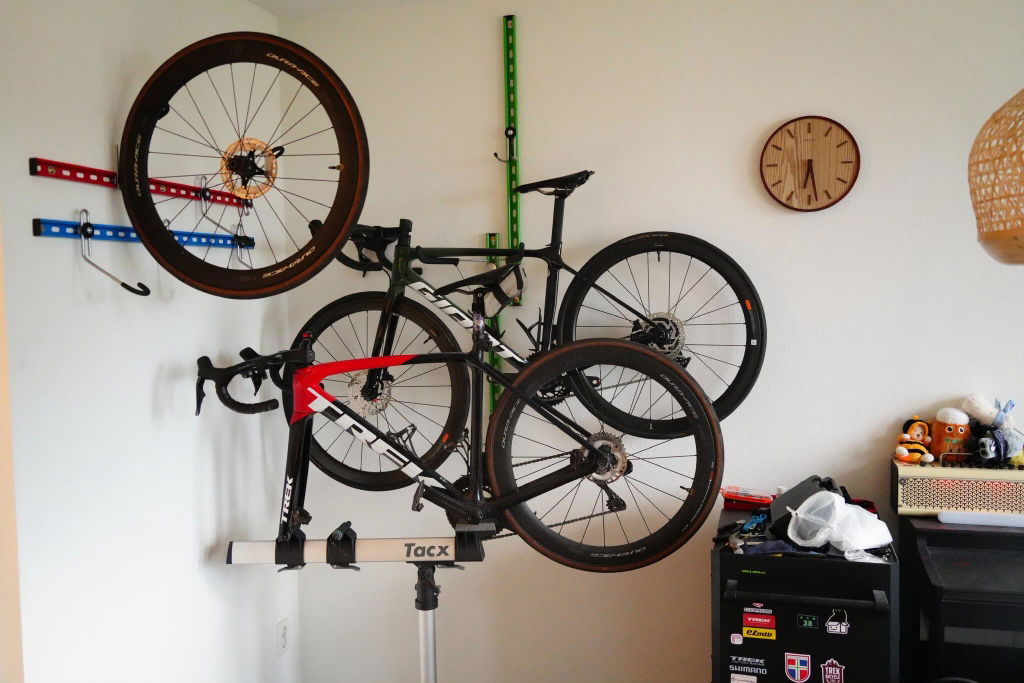
By securing a heavy-duty cold-formed steel rail horizontally, you can shift, rotate, and reposition your diy wall mount guitar hanger hardware along the track as your gear requirements transform over time.
Top 5 Storage and Practice Problems GearHooks Solves
-
Tripping Hazards and Broken Necks: Floor tripods in children's bedrooms are easily knocked over. Wall storage places delicate headstocks high out of pet and toddler collision zones.
-
Finish Chemical Reactions: Inexpensive foam mounts ruin delicate vintage and modern finishes. GearHooks uses non-reactive silicone sleeves that are 100% safe for nitrocellulose lacquer and poly varnishes alike.
-
Wall Damage from Repeated Upgrades: As your child progresses through five instrument scales, traditional hanging hooks require drilling dozens of individual holes. A single GearRail accommodates infinite hook relocations with zero new wall punctures.
-
Wasted Space Around Awkward Headstocks: Small ukuleles and wide dreadnoughts leave dead space on fixed hangers. The 360-degree rotational adjustment of GearHooks aligns headstocks diagonally to fit more gear in narrow alcoves.
-
Neglected Practice Routines: Case-bound guitars get ignored. Instruments hung visibly on safe hooks are picked up spontaneously, turning daily practice into a natural lifestyle habit.
Upgrade your music room with professional, expandable instrument wall storage.
Browse Extra Guitar Hooks on GearHooks →
Frequently Asked Questions
How to hang a guitar on the wall without nails?
- Tripping Hazards and Broken Necks: Floor tripods in children's bedrooms are easily knocked over. Wall storage places delicate headstocks high out of pet and toddler collision zones.
- Finish Chemical Reactions: Inexpensive foam mounts ruin delicate vintage and modern finishes. GearHooks uses non-reactive silicone sleeves that are 100% safe for nitrocellulose lacquer and poly varnishes alike.
- Wall Damage from Repeated Upgrades: As your child progresses through five instrument scales, traditional hanging hooks require drilling dozens of individual holes. A single GearRail accommodates infinite hook relocations with zero new wall punctures.
- Wasted Space Around Awkward Headstocks: Small ukuleles and wide dreadnoughts leave dead space on fixed hangers. The 360-degree rotational adjustment of GearHooks aligns headstocks diagonally to fit more gear in narrow alcoves.
- Neglected Practice Routines: Case-bound guitars get ignored. Instruments hung visibly on safe hooks are picked up spontaneously, turning daily practice into a natural lifestyle habit.
Upgrade your music room with professional, expandable instrument wall storage.
Browse Extra Guitar Hooks on GearHooks →Frequently Asked Questions
How to hang a guitar on the wall without nails?
How to hang a guitar on the wall without nails?
Hanging a guitar safely requires load-bearing fasteners anchored into wall studs or heavy-duty masonry anchors rather than adhesive strips or picture nails. While lightweight accessories can use adhesive brackets, stringed instruments exert continuous cantilevered tension that requires an engineered steel mounting rail or dedicated mechanical wall anchors.
How can I make a homemade guitar strap?
You can craft a durable homemade guitar strap using heavy cotton webbing, retired leather belts, or recycled seatbelt nylon cut to around 55 inches. Reinforce both ends with dual-layer stitched leather end-tabs and punch precise keyhole slots to lock tightly over standard endpins.
How to make a homemade guitar pick holder?
A simple DIY guitar pick holder can be crafted from folded leather remnants glued along three seams, a repurposed tin container lined with felt, or a spring-loaded wooden block mounted beside your guitar wall rack. Placing pick holders near your wall hangers ensures practice sessions start without searching for gear.
How can I make a DIY guitar at home?
Building a beginner DIY guitar at home is most reliably accomplished with pre-routed kit parts featuring a pre-fretted bolt-on neck and shaped timber body. Assembly teaches children essential mechanics like neck relief, pickup wiring, bridge intonation, and string action while instilling deep pride in their instrument.
Investing in your child's musical journey requires responsive instruments that fit their evolving stature. By pairing ergonomic sizing milestones with a heavy-duty, expandable diy wall mount guitar hanger system, you create an inspiring, organized music space that elevates practice habits for years to come.

🛍️ Part of a Collection
Guitar wall mounts | Hooks & Racks | GearHooks
Discover all products in this collection
View Full Collection →