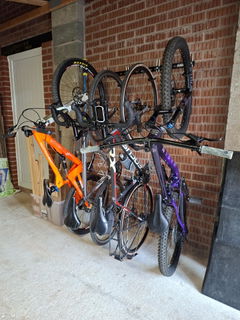
Ukulele wall hangers for schools, colleges, classrooms and commumity spaces
Ukulele wall hangers allow you to store a lot of ukuleles quickly and easily.
If you want to store a lot of ukuleles but don't have much space - this is the solution.
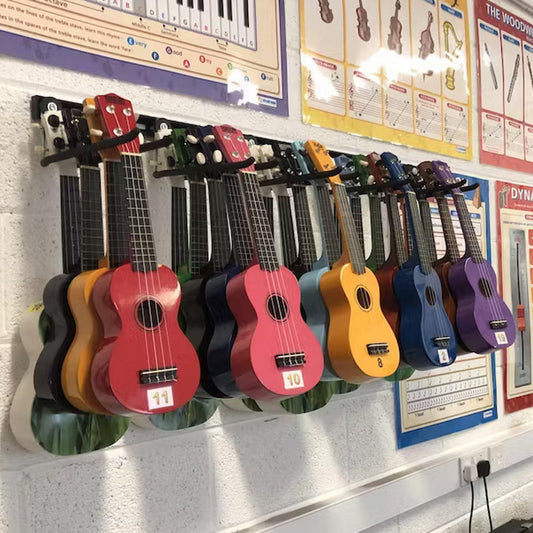
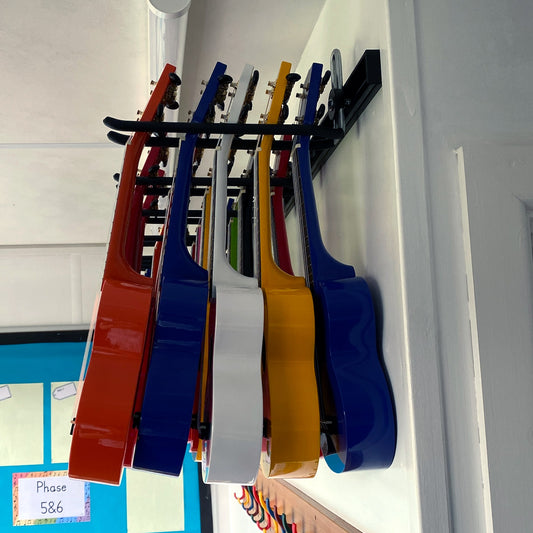
Our Ukulele Wall Racks are space saving, easy to fit and very cost effective. They look great too. Each 1 metre long rack fits with just 3 holes and will store up to 25 ukuleles per rack.
If you need to store more you can fit multiple racks next to each other or one above the other.
They are ideal for classrooms and make your ukuleles easy to access and quick to put away at the end of a lesson. Solve all your ukulele storage problems with the GearHooks Ukulele racks.
Questions and Answers About Storing Large Numbers of Ukuleles
Storing a single ukulele is simple. A gig bag, a small stand, or a wall hook is usually sufficient. The situation changes significantly when an organisation needs to store dozens of instruments. Schools, colleges, music academies, rehearsal studios, and community music groups often maintain large classroom sets of ukuleles so that entire groups can play simultaneously. Managing these collections requires storage solutions that prioritise organisation, accessibility, and space efficiency.
When many instruments must be stored in the same room, traditional approaches such as individual cases or scattered floor stands quickly become impractical. They consume valuable floor space, slow down lesson transitions, and increase the risk of instruments being knocked or damaged. Large collections require scalable storage systems that keep instruments visible, organised, and easy to distribute.
Wall-mounted rack systems are widely considered one of the most efficient solutions for storing many ukuleles. By using vertical wall space rather than floor space, these systems allow large numbers of instruments to be stored in a compact footprint. In classrooms and studios, wall racks help maintain clear working areas while keeping instruments organised and accessible.
Key Points Summary
- Storing large numbers of ukuleles requires different solutions than storing one or two instruments.
- Individual gig bags and cases become inefficient when managing large classroom sets.
- Floor stands take up valuable space and do not scale well for large collections.
- Wall-mounted racks use vertical space and can store dozens of instruments efficiently.
- Clear organisation helps teachers distribute and collect instruments quickly.
- Hanging instruments keeps them visible, organised, and protected from accidental damage.
- Modular storage systems allow collections to grow without redesigning the entire setup.
- Proper environmental conditions help protect wooden instruments from damage.
1. What is the best way to store a large number of ukuleles in a classroom or music department?
When storing dozens of ukuleles, the main goals are efficiency, organisation, and easy access. Traditional methods such as gig bags or individual stands become difficult to manage because they take up space and slow down the process of distributing instruments to students.
Wall-mounted rack systems are commonly used in schools because they allow many instruments to be stored together in a structured and visible way. These systems typically consist of rails with padded hooks that support the instrument by the neck or headstock.
Because ukuleles are small and lightweight, several instruments can often hang from the same hook or closely spaced hooks. This allows large classroom sets to be stored in a relatively small wall area while keeping the floor clear for teaching activities.
2. Why is storing many ukuleles more challenging than storing one or two?
Storing one or two ukuleles is straightforward because there is little need for complex organisation. A single stand, hook, or case is usually sufficient.
However, when a classroom or ensemble owns twenty, thirty, or more instruments, several challenges emerge. Space becomes limited, instruments must be clearly organised, and they must be accessible to large groups at the same time. Without structured storage, instruments may end up stacked together, placed on desks, or stored in piles of cases.
Large collections require storage systems that keep instruments visible and separated. This reduces the risk of damage and makes it easier to distribute and collect instruments during lessons or rehearsals.
3. Are wall-mounted racks better than floor stands for large ukulele collections?
For small collections, floor stands can work well. However, when storing many instruments, floor stands quickly occupy large amounts of space.
Wall-mounted racks are often more efficient because they use vertical space rather than floor space. This allows instruments to be stored along a wall while leaving the centre of the room free for students, chairs, and music stands.
In environments such as classrooms and rehearsal rooms, preserving floor space is important for safety and flexibility. Wall racks provide high storage capacity without crowding the room.
4. How many ukuleles can be stored on a wall rack?
You can easily store 25 or 30 ukuleles in 1 metre (about 40") of wall space if they are stored on hooks that allow ukuleles to stack one behind the other. If racks are fitted one above the other you can easily double or triple that number.
Some rack systems allow multiple instruments to hang from a single hook or allow hooks to be placed close together. Because ukuleles are compact, a single rack can often hold dozens of instruments.
Additional racks can also be mounted vertically or horizontally, making it possible to expand storage capacity without significantly increasing the amount of space used.
5. What are the space-saving benefits of wall-mounted ukulele storage?
Wall storage makes use of vertical space that would otherwise remain unused. In many classrooms and studios, walls provide large areas where instruments can be stored without interfering with daily activities.
By hanging instruments on racks, sometimes over lower shelves or bookcases, large numbers of ukuleles can be stored while leaving floors clear. This improves safety and creates a more organised learning environment.
Wall storage also allows teachers and students to see all instruments at once, which helps ensure that instruments are returned after use.
6. Is it safe to hang ukuleles on wall hooks or racks?
Yes, hanging a ukulele by its headstock or neck support is a widely accepted storage method. Ukuleles are lightweight instruments, and their neck structures are designed to support their weight.
Most rack systems use padded hooks or supports to protect the instrument’s finish and prevent slipping. When racks are installed securely into structural wall supports, hanging storage is both safe and practical.
This method is commonly used in music classrooms, studios, and retail environments.
7. What storage options are available when wall space is limited?
There is usually unused wall space above bookcases, shelving or even coat hooks. However, if plenty of floor space is available, mobile storage racks can be a practical alternative. These racks are designed to hold multiple instruments while allowing them to be moved between rooms.
Mobile racks typically include padded supports and locking wheels for stability. They can store classroom sets of instruments while still allowing flexibility when rooms are shared by multiple activities.
This type of storage is particularly useful in schools where instruments must be transported between different classrooms.
8. Is storing ukuleles in cases practical for large instrument collections?
Cases and gig bags are useful for protecting individual instruments during transport. However, they are less practical for storing large numbers of instruments in one room.
When dozens of instruments are stored in cases, they often end up stacked together or piled on shelves. This can make it difficult to access instruments quickly and can slow down the start and end of lessons.
Open storage systems such as racks allow instruments to be distributed and returned more efficiently.
9. How can teachers organise dozens of ukuleles effectively?
Clear organisation is essential when managing many instruments. One simple approach is to label each rack position or hook with numbers or letters.
Teachers may also assign instruments to specific students or groups, ensuring that each instrument is returned to the correct place after use. This reduces confusion and helps track missing instruments.
Consistent organisation improves efficiency and keeps storage areas tidy.
10. What environmental conditions should be considered when storing many ukuleles?
Ukuleles are usually made from wood, which can react to changes in temperature and humidity. Instruments should be stored in environments with stable conditions.
Storage areas should avoid direct sunlight, strong heat sources, or damp environments. Maintaining consistent temperature and humidity helps prevent issues such as cracking, warping, or tuning instability.
These considerations become even more important when managing large collections of instruments.
11. How does good storage improve classroom efficiency?
Open wall storage systems help teachers save time during lessons. When instruments are clearly organised and visible, students can collect and return them quickly.
This reduces downtime and allows more time for teaching and practice. In large classes, even small improvements in efficiency can significantly improve lesson flow.
Well-designed storage systems therefore support both organisation and effective teaching.
12. Are DIY ukulele storage solutions practical?
Yes, if someone has time to make them, many schools create their own storage racks using simple materials such as wood frames, padded supports, and hooks. DIY solutions can be cost-effective and customised to fit the available space.
Teachers often design racks that hold entire classroom sets of instruments while keeping them organised and easy to access.
Although professionally manufactured racks are available, well-designed DIY systems can also provide effective storage.
13. Can wall racks be used for large home ukulele collections?
Yes. Musicians and collectors who own many instruments often face similar storage challenges to schools and studios.
Using wall racks allows large collections to be displayed and stored efficiently without filling the room with cases or stands. Instruments remain visible, accessible, and organised.
This approach can transform a cluttered music room into a functional and visually appealing workspace.
14. What safety considerations matter when installing ukulele wall racks?
Wall racks must be installed securely so they can safely support multiple instruments. Mounting racks into structural supports such as wall studs helps ensure stability.
It is also important to position racks in areas where instruments will not be knocked by passing people or equipment.
Secure installation and careful placement help protect both instruments and users.
15. What storage solution works best as a ukulele program grows?
Schools and ensembles often expand their instrument collections over time. For this reason, scalable storage systems are particularly useful.
Modular wall rack systems allow additional hooks or rails to be added as more instruments are acquired. This flexibility makes it possible to expand storage capacity without replacing the entire setup.
sc