
Master Your Shed: Tips for Organizing a Community Garden's Tool Shed
Overview
Managing a community garden involves more than just planting; it requires an organized tool shed to ensure efficiency and safety. By implementing effective storage solutions and engaging community members in maintenance, you can transform a chaotic space into a well-ordered environment that enhances productivity and fosters connections. These practical strategies will help keep your garden tools accessible and in good condition, benefiting everyone involved.
Table of Contents
- Understanding the Importance of Organization
- Assessing Your Tool Shed Space
- Declutter Your Shed
- Plan Your Organization Strategy
- Implementing Effective Storage Solutions
- Wall Storage Solutions
- Floor Storage Options
- Labeling and Inventory Management
- Label Every Tool
- Maintain an Inventory List
- Engaging the Community in Maintenance
- Establishing Tool Use Guidelines
- Community Clean-Up Days
- Innovative Ideas for Tool Storage
- Vertical Gardens and Tool Racks
- Repurposed Furniture
- Essential Maintenance Practices
- Make Your Garden Shed the Heart of Community Engagement
Community gardens are essential for fostering connections among neighbors and providing fresh produce to local families. However, when various tools accumulate in a garden tool shed, it can quickly become a chaotic mess. If you’re involved in managing a community garden, maintaining your tool shed organization is key. In this article, we'll share effective tips for organizing a community garden's tool shed using shed organization tools. Let’s dive in!
Understanding the Importance of Organization
Before we get into the nitty-gritty of organizing your tool shed, it's crucial to understand why organization is vital:
- Efficiency: When tools are organized, community members can find what they need quickly, allowing them to get to work without delays.
- Safety: A clutter-free environment minimizes accidents and injuries, making it safer for everyone involved.
- Maintenance: Properly stored tools are less prone to damage, rust, and other forms of deterioration, saving you money in the long run.
Assessing Your Tool Shed Space
The first step in organizing your community garden's tool shed is to assess the space you have available. A well-organized tool shed can make a world of difference. Here’s how to begin:
Declutter Your Shed
Start by removing everything from the shed. This will give you a clear view of the available space and the tools you currently have. As you take each item out, ask yourself the following:
- Is this tool used frequently, or has it been lying unused for a long time?
- Is this tool still in good working condition?
- Is this tool essential for the community garden’s tasks?
Items that are broken, rusty, or rarely used should be discarded, while functional tools can be cleaned and readied for organization.
Plan Your Organization Strategy
After decluttering, you need to develop a plan that accommodates every tool effectively. Consider the following:
- Sort tools by category (e.g., hand tools, power tools, watering equipment).
- Identify the frequency of use for each category to determine where to store it in the shed.
- Designate specific zones within the shed for different types of tools to streamline access.
Implementing Effective Storage Solutions
Once you have a clear assessment and plan in place, it’s time to implement effective storage solutions. This is where shed organization tools truly shine. Here are some organizational tools and strategies:
Wall Storage Solutions
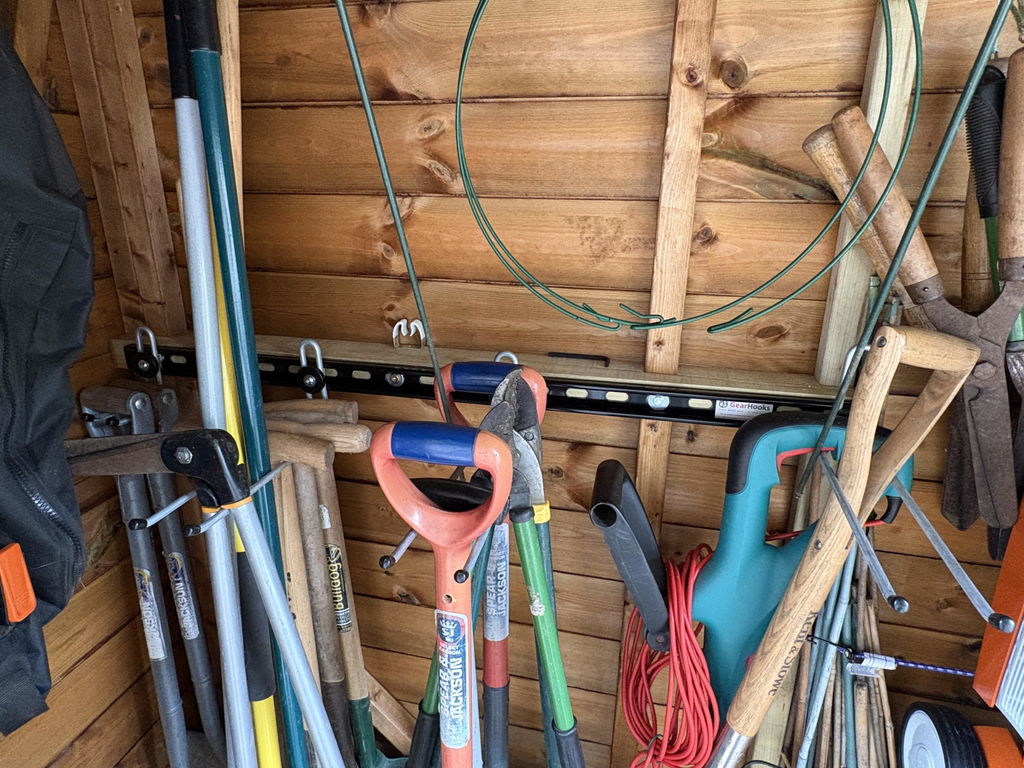
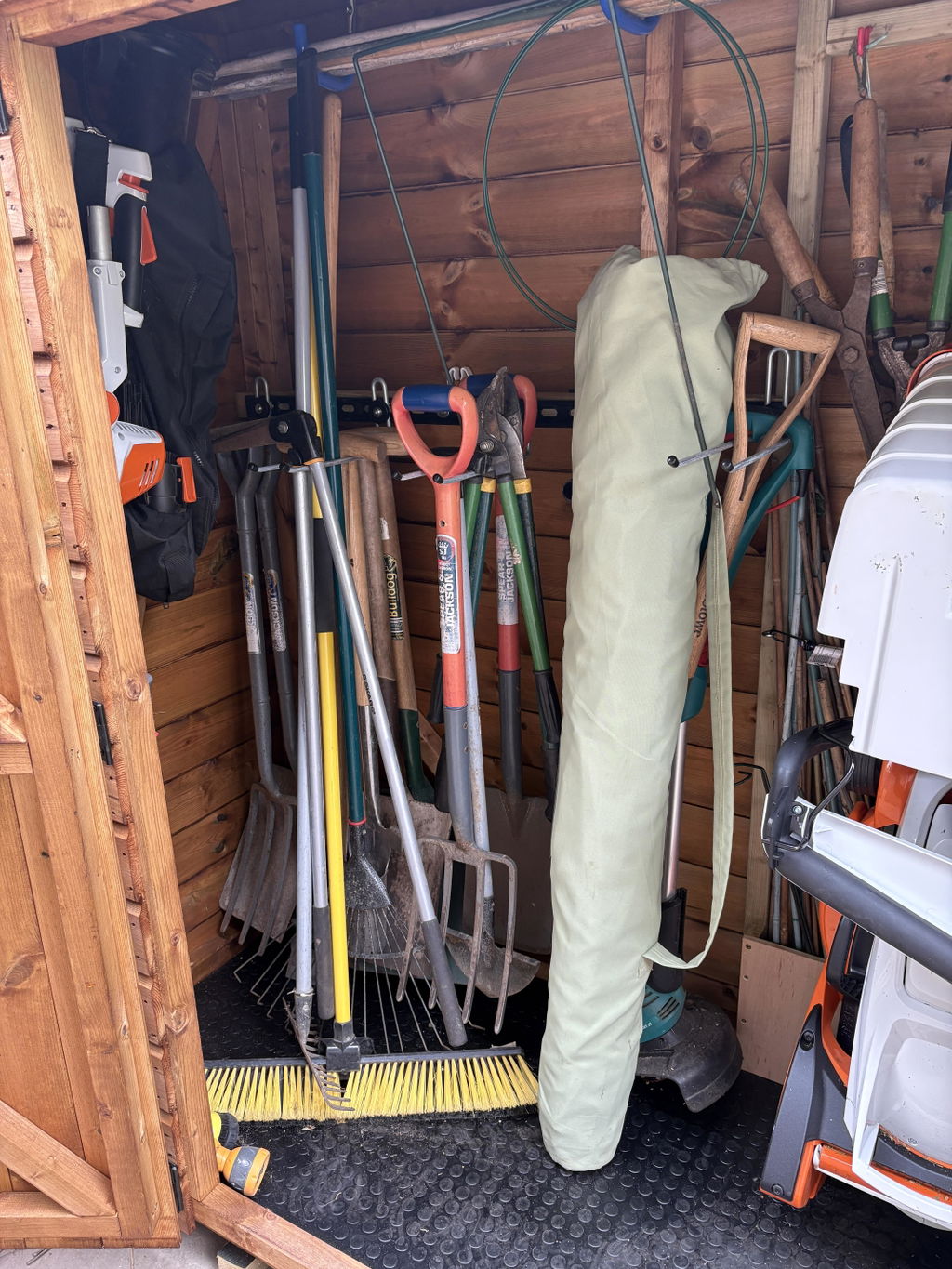
Maximizing wall space is crucial in tight tool sheds. Using garden tool hooks can elevate your organization strategy significantly. Here are some effective wall storage solutions:
- Garden Tool Hooks: These tools help you hang everything from rakes to hoes, saving floor space
- Heavy-Duty Tool Racks: Utilize a heavy-duty garden tool rack that can store 20 or more tools on a single wall. This creates more space for larger equipment and keeps smaller tools accessible.
- Pegboards: These can provide customizable storage for hooks and shelves, enabling a layout that's uniquely tailored to your shed’s needs.
Floor Storage Options
Although wall space should be prioritized, floor storage can play an important role too:
- Toolboxes: Use large toolboxes for storing smaller hand tools, ensuring everything is compact and easily transportable.
- Bins and Containers: Clear bins can keep tools visible, while labeled containers can help in identifying the contents swiftly.
- Rolling Carts: These provide flexibility for moving tools around the garden as needed, ultimately enhancing efficiency.
Labeling and Inventory Management
Now that you have a system in place, labeling items and maintaining an inventory is crucial for long-term organization. Here’s how to do it:
Label Every Tool
Labels provide clarity and ensure everyone knows where each tool belongs. Invest in high-quality labels that can withstand the outdoor elements. Here are some labeling strategies:
- Label each container or storage bin according to its contents.
- Use color-coded labels for different categories of tools.
- Add expiration dates for seasonal tools that may not be used for certain periods.
Maintain an Inventory List
Keeping an updated inventory list can be a game changer. You can set up a simple spreadsheet, or use specialized inventory apps that can help track the tools you have, their conditions, and their locations. An organized list can:
- Help when you need to replace tools.
- Prevent over-purchasing of tools.
- Improve communication among members regarding tool availability.
Engaging the Community in Maintenance
Ensure your community members feel a sense of ownership over the tool shed. Engaging members allows for shared responsibility in maintenance, which benefits everyone involved.
Establishing Tool Use Guidelines
Draft a simple set of guidelines that outlines how tools should be used and maintained. Here's how to approach it:
- Encourage everyone to clean tools after use.
- Implement a check-in/check-out system that details who is using what tools.
- Discuss consequences for misplacing or damaging tools to encourage responsibility.
Community Clean-Up Days
Set specific days for community clean-up and maintenance events. These gatherings can help keep the shed organized and tools in good condition. Utilize these events to:
- Re-evaluate the organization system periodically.
- Incorporate a sense of community responsibility.
- Encourage discussions on improvements and changes based on feedback from community members.
Innovative Ideas for Tool Storage
While traditional storage methods are effective, adding some innovative ideas can optimize your tool shed further. Here are some creative storage solutions:
Vertical Gardens and Tool Racks
Incorporate vertical space creatively. Vertical gardens can be designed alongside tool hooks to maximize space. Consider using:
- Hanging planters that can double as storage for smaller hand tools.
- Installing multi-tiered shelves to accommodate pots and garden supplies.
Repurposed Furniture
Utilizing old furniture can provide unique solutions. For instance:
- Old dressers can be repurposed for tool storage, with drawers designated for various tools.
- Wood pallets can provide DIY shelving and wall brackets for larger items.
Essential Maintenance Practices
Once your community garden tool shed is organized, maintaining that organization is paramount. Implement these practices for ongoing success:
- Regular inspections of tools to check for any repairs needed.
- Scheduled periods (e.g., seasonally) to reassess and reorganize the shed.
- Encouraging ongoing communication among community members regarding tool usage.
Make Your Garden Shed the Heart of Community Engagement
With these tips and strategies, organizing your community garden tool shed is not just about creating an efficient workspace; it’s about fostering community spirit, enhancing productivity, and ensuring safety. Investing time in the organization will undoubtedly pay off, not only in tool longevity but also in the relationships built through the locally cherished space. Remember, the better organized your shed, the more flourishing your community garden will be!
For additional organization tools and solutions to enhance your gardening experience, visit GearHooks, where you can explore a variety of options designed to optimize your gardening efforts.
Frequently Asked Questions
1. Why is organizing a community garden tool shed important?
2. What are the first steps in organizing a tool shed?
3. What are some effective storage solutions for a garden tool shed?
4. How can I maintain organization in the tool shed over time?
5. What innovative ideas can enhance tool storage in a garden shed?
Linked Product

Heavy Duty Garden Tool Rack | Wall Organiser for 20+ Tools | GearHooks
The Heavy Duty Garden Tool Rack is designed to efficiently store over 20 gardening tools, including large and heavy equipment, while maximizing wall space in your garage or shed. Its adjustable GearHooks® allow for flexible tool organization, making it easy to access and store a variety of tools from small hand tools to heavy electric equipment. With simple installation and durable construction, this wall organiser helps keep your gardening tools tidy and easily accessible.
View ProductKey Takeaways
- Efficiency: Organized tools allow community members to find what they need quickly, reducing delays in work.
- Safety: A clutter-free tool shed minimizes the risk of accidents and injuries for all users.
- Decluttering: Regularly assess and remove unused or damaged tools to maintain a functional space.
- Storage Solutions: Utilize wall hooks, heavy-duty racks, and pegboards to maximize space and accessibility.
- Labeling: Clearly label tools and storage containers to ensure easy identification and organization.
- Community Engagement: Involve community members in maintenance and establish guidelines for tool usage to foster shared responsibility.
- Regular Maintenance: Schedule periodic inspections and reorganizations to keep the tool shed in top condition.
Glossary
| Term | Meaning |
|---|---|
| Community Garden | A shared space where neighbors grow plants and vegetables together. |
| Tool Shed | A storage area for gardening tools and equipment. |
| Declutter | The process of removing unnecessary items to create space. |
| Shed Organization Tools | Items used to keep tools organized, such as hooks and racks. |
| Labeling | Marking items for easy identification and organization. |
| Inventory List | A record of tools, their conditions, and locations. |
| Vertical Gardens | Plants grown upwards to save space and enhance aesthetics. |
| Check-in/Check-out System | A method for tracking tool usage among community members. |
| Maintenance Practices | Regular actions taken to keep tools and the shed in good condition. |